Tuesday, 24 August 2010

Hospital Field Best Plot Competition winner 2010

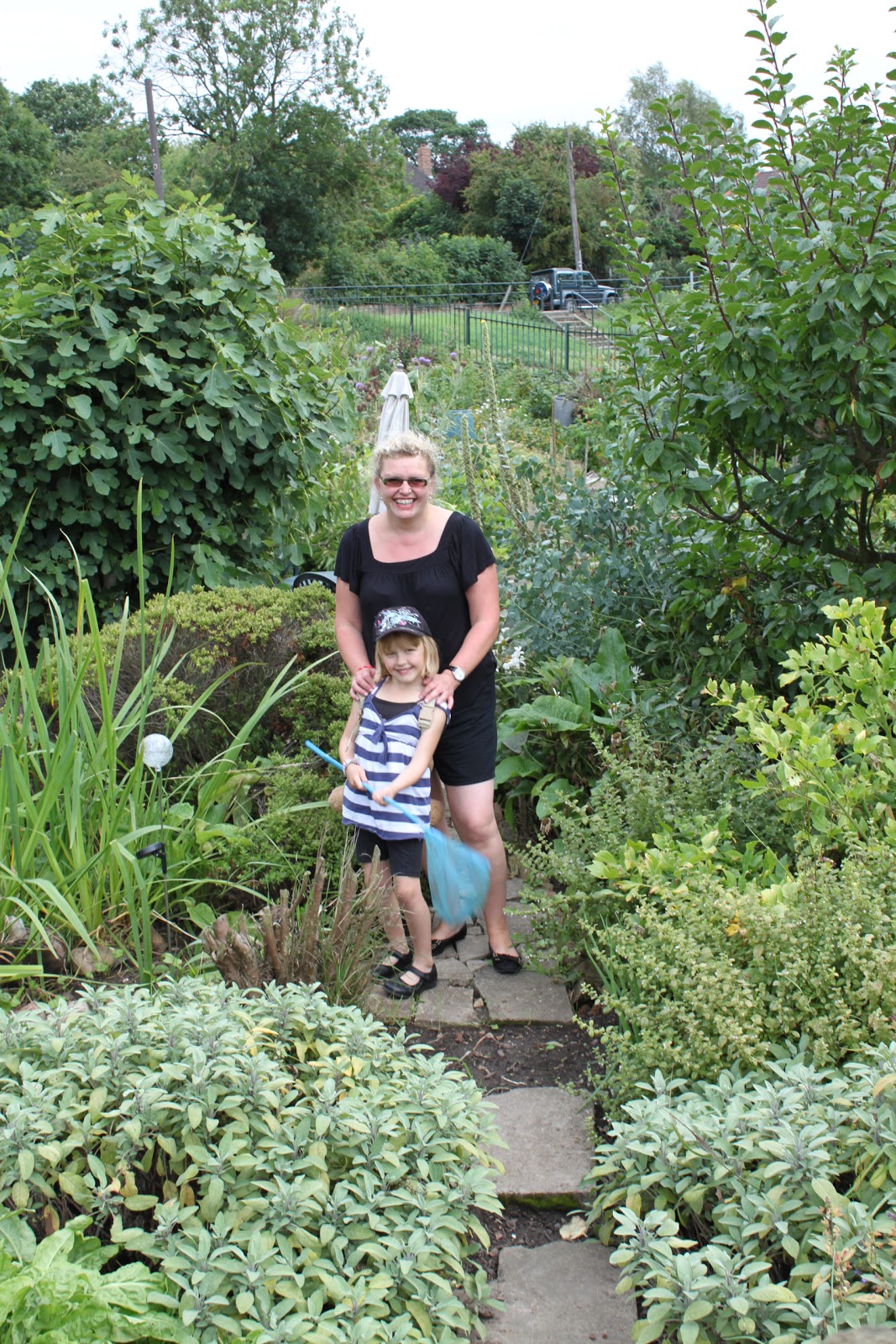
Sally Ann Gatus and her daughter, Laura
Sally-Ann Gatus, the winner of the Best Plot Competition 2010 on Hospital Field, is a real allotment inspiration. When she first took on her plot in October 1996 it only had a few ancient gooseberry bushes on it. Now it is a haven of vegetables, fruit, herbs, flowers and wildlife. When she came to the site, her style of gardening, such as introducing a pond and an herb garden, was viewed with suspicion by some. One of her neighbours, now no longer a plotholder, used to make comments such as ‘what on earth are you doing lass, what do you want with a herb garden?’ and ‘you are supposed to plant in rows.’ Times have changes now and her organic practices, recycling and encouragement of wildlife are far more common on the site.


Though Sally is certainly the principal gardener on her plot she is often joined by her husband Kevin, children Laura and Angus and various friends and their children from Dringhouses Primary School where Sally has been running the gardening club for the last 2 years. She loves her Hospital Field plot and this enthusiasm has definitely rubbed on her kids. Sally has been very creative in the way she has involved and interested them in the plot. She believes in putting the kids in their old clothes and just letting them get dirty, ‘they love to build dens and they love to pick. And I think it is really important for them to be aware of nature and of plants and where food comes from’. However, she doesn’t stop at just letting the kids help on the plot. Sally told me one of the ways she kept her kids entertained, ‘My kids are really into fossils and crystals so one day I came down and cleared an area of the plot, I buried a plastic dinosaur head and marked the area up with string in a grid. I then gave the kids brushes and trowels and told them it was an archaeological dig. They absolutely loved it.’


As a keen recycler, she brings her vegetable waste from home and uses torn up cardboard and leaves to mulch her plants. She has even created a cloche from the frame of swing her kids have grown out of.  Her composting is really impressive too. She bags up all her tops and leaves them at one end of the plot for at least 6 months, then in April or May she digs trenches and digs it all back into the soil. The perennial weeds she drowns and makes into a weed tea to feed to the plants, the woody material she tends to chop up with secateurs and add to her path and once a year, around the 5th of November, she has a bonfire with the kids.

Sally often saves seeds from this year’s crops to sow in the next. Those seeds she doesn’t use or eat she uses to make homemade fat balls. She shared her recipe with me. The ingredients change according to what she has around but the basics are bacon rind, bread, old breakfast cereal, old seed, lard – you break up the lard into pieces and mix it into the other ingredients, you then press the mixture into pine cone and tie them to the trees.

Finally, her best piece advice, which she received when new to allotment gardening is ‘don’t water too early in the season because the plants will get used to it and when you have a dry spell they won’t have developed decent roots.’ That seems to me to be more useful advice than ‘you are supposed to plant in rows’.

N.B. I am still trying to get hold of the Hob Moor winner, Mrs Valerie Warren, for a similar article on her.  If you know her please ask her to get in touch with me.  Caroline Bush

Tuesday, 17 August 2010

A course on Urban Horticulture

The nice folk at the University of York thought some of us might be interested in a course they are running on Urban Horticulture.  The deails and contact information are below.  If you do book in please can you let them know that you heard about the course through the Scarcroft and District Allotment and Amateur Gardeners Association website.

Lifelong learning - Introduction to Urban Horticulture


The history of allotments and urban food production is a long one. We begin with the earliest cities and civilisations: the initial separation between people as growers, and people as consumers of food.  Progressing through the Middle Ages, the Enclosures and the agricultural and industrial revolutions, we find inevitable and continual tensions over access to land and struggles against food poverty; a fascinating story of possession, dispossession and repossession. We then study the gradual rise of the allotment as a solution - to a constantly shifting problem - as well as the surges and declines it has seen over time.We look abroad, to Cuba, China, Belgium, African countries and the USA, where urban food growing has evolved in dramatically different directions. Finally, we examine the local ‘status quo’, including a visit to a York allotment site, and the evolution of students’ own horticultural knowledge and interest.

Catherine Heinemeyer BSc MSc
Term: Autumn
Day: Thursday
Start Date: 07 October 2010
Time: 7-9pm
No. of weeks: 11
Full fee: £107.00
Credits: 10
Places Left: 7
Location:  University of York Campus

you can book through this website:  https://store.york.ac.uk/courses/coursedetails.asp?CourseDateID=192&CourseID=140&compid=1

Another Bat Walk

Following the popularity of our last bat walk, we are holding another one on Friday 3rd September, starting at 8.30pm (sunset is 19.43 that night) by the Association Shop on Scarcroft. As before, a talk will be given by the ever engaging Joanne Hodgson from Yorkshire Wildlife Trust.  We now know where the bats are so have a really good chance of detecting them.  There will only be 12 places on this walk and all places MUST be booked in advance by e-mailing scarcroftallotments@live.co.uk , stating how many people will be in your party.  There will be a charge of £1 per person and all proceeds will go to Yorkshire Wildlife Trust.  However, this event is only open to association members so if you are not a member please will at least one member of your party join the association (£2.50 jan - dec).


Tree work

We are lucky enough to have a Sustrans Tree Warden as one of our plotholders on Scarcroft, Iris Wells. Recently, Iris has been carrying out some pruning work on trees that are on the communal paths through the site, on a voluntary basis. She and her colleague have been removing suckers that were coming up from the base of the trees, thus making it easier for the paths to be maintained by the council and being beneficial to the trees and their appearance.  Below are some before and after shots.


Ash before

Ash after

Sycamore before

Sycamore after

Sunday, 15 August 2010

Profile of the Best Plot Competition SOUTH area winner

Malcolm and Gill Wignall Plot 33 Scarcroft are the winners of the City of York Council's Best Plot Competition 2010 for the South area i.e. the area which covers Scarcroft, Hob Moor and Hospital Fields.  I visited them on their plot to find out about them, the way they garden and what I might learn from their success.

Malcolm and Gill Wignall


According to Malcolm, he does 10% of the work and Gill does 90%.  She says he is good at mowing, edging and cooking, particularly cooking.  He says she is good at all the rest of it.  They have worked this plot on Scarcroft for the last 7 years, but have shared other plots on the site before that.  Gill told me that when she was first offered this plot, Janice, the previous site secretary, offered her one that was immaculately dug over and one that was a solid mass of creeping buttercup but had a lavender hedge and a plum tree.  The lavender hedge swung it.   It took her 4 years to get all of the plot under cultivation and flowers still play a large part of Gill's plot which she describes more as an vegetable garden. 

She loves every aspect of having an allotment, except the occasional thefts.  She is even keen on digging, 'I love the way a patch of land looks a mess and then you dig it over and all of a sudden it's all orderly and ready'.  Gill is a committed organic gardener and over the years she has worked on improving the condition of her clay soil with compost and manure.  The two main pieces of advice she would give to anyone new to vegetable gardening - 'get on top of the weeds and improve your soil'.  This year she says she has been really pleased with the Lady Chrystl potatoes recommended to her by the men in the allotment shop and her white dwarf beans. She described her approach to allotment gardening as 'I like to do a bit of everything, but I don't get too worried.  I like to try things but if it doesn't work I go on to something else.'  Well, from the look of her and Malcolm's plot something is definitely working!  Congratulations to them both.

Gill and Malcolm are happy for other plotholders to come and visit their plot, but please only go onto it if they are around.

I hope to post up similar interviews with the winners from Hob Moor and Hospital Fields but as neither of them are association members it is taking me a little longer to get in touch with them. 

Caroline Bush

Saturday, 14 August 2010

How courgettes punish you if you go on holiday...


Turn your back for a moment and the marrows will be upon you.  The barrow was needed to get this lot home.

Here's 2 courgette recipes I picked up recently.

Courgette and Feta Soup (as told me by Ruth Hodgins)
  • onions, garlic, courgette, veg stock and feta
  • cook the onions until translucent, add garlic, add cubed courgettes, add veg stock, cook til courgettes soft then crumble in feta. Easy and delicious

Courgette Tea Cake
  • 1 egg, 125 ml sunflower oil, 175g courgettes (grated), 150g wholemeal flour, 1/2 tsp baking powder, 1 tsp bicarbonate of soda, 1 tsp ground cinnamon, 175g sugar, 75g sultanas, 75g walnuts
  • Preheat oven to 180 C / gas mark 4
  • grease and line a loaf tin
  • beat egg and sunflower oil together
  • grate courgettes
  • add flour, baking powder, bicarbonate of soda, spices, sugar,sultanas and walnuts to courgettes and mix
  • mix in egg and oil mix and pour into tin
  • cook for 1 hour and test with a skewer to check it is cooked (if it comes out clean it is).

The Special Projects Task Force Get To Work

Today a few volunteers (I like to think of them as the Special Projects Task Force) got together by the allotment hut to do Mike's bidding.  Our tasks were to clear the rubble by the shop and to search for the water mains so that we can eventually have running water in the shop, which will be much better for those that handle the fertilisers etc.  Well, after lots of bare chested sweating and tea and cake scoffing, we managed one of two.  The rubble is clear, but despite a lovely tidy archeaologically useful trench no water pipe was found.  We even played around with a metal detector for a while to see if that helped, but it didn't. Ah well we will return to fight another day.

Many thanks to all those who helped out:
  • Katy Brierley
  • John Brierley
  • Iris Wells
  • Graham Sanderson
  • Adrian Clayton
  • Linda James
  • Frank Rice
  • Caroline Bush
  • Mike Oldfield
Before


After (its more impressive in real life, honest)


Searching for the mains

Hard at work

We are likely to have more special projects going on later in the year so if you would like to volunteer please contact the association on scarcroftallotments@live.co.uk.  The more the merrier.


Friday, 13 August 2010

Winners of the 2010 York Best Plot Allotment Competition

We have just received the names of this year's winners.  So congratulations to the following: 
NORTH
Mrs Rebecca Rowan 5B Strensall
Mrs E Joy Taylor 24B Wigginton Road NORTH AREA WINNER

EAST
Miss Martha Moulson 149A Low Moor
Mrs Helen & Mr Paul Sellers 3 Hempland Lane
Mrs Jean Bearpark 37A Glen EAST AREA WINNER

SOUTH
Mrs Valerie Warren 16 Hob Moor

Mrs Valerie Warren
Mr Kevin & Mrs Sally-Ann Gatus 20 Hospital Field

Mrs Sally-Ann Gatus

Mr Malcolm & Mrs Gill Wignall 33 Scarcroft SOUTH AREA WINNER

Mrs Gill Wignall

WEST
Mr Ambery & Mrs Susan Dew 16 Carr
Mr Steve Jones & Mr Geoff Pearson 14 Holgate
Mrs Sarah West 21C Howe Hill
Mr Alan Hayes 9 Green Lane
Miss Paula Smith 13 & 16 New Lane WEST AREA WINNER
Beanpoles donated by Nick Milner to be presented to each of the 4 Area Winners

Well done to you all.

Friday, 30 July 2010

Harlow Carr Trip

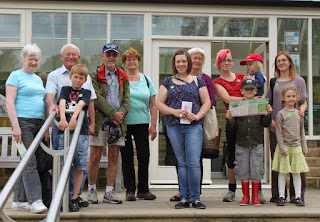
23 people including 6 kids joined us on our trip to RHS Harlow Carr.  The weather was kind and the gardens were lovely.  The veg plots were very pretty but we still can't believe they don't cover their cabbages.


Monday, 26 July 2010

Free Baby Swing

This swing is free to any one who wants it.  It is suitable for young children 0 - 1ish.  The previous owner has grown out of it so if you want it just come and pick it up from outside the allotment shop.

Micklegate Ward Event on Scarcroft Green

Last Tuesday representatives of the Scarcroft and District Allotment Association attended this ward event.  We had a little stand to show the kind of things the Association does and to give examples of veg gardening that is possible with only a small backyard space.   We gained 5 new association members and got to show quite a few people (young and old) what aubergines, peppers and chillis looked like on the plant.


Thanks to Mike Oldfield and George Foster (pictured above left) for providing the plants.

Tuesday, 20 July 2010

Harlow Carr Trip

Do you want to join us on a FREE trip to Harlow Carr?  We are going next Tuesday 27th of July.   The association is an affiliate member of the RHS which means we are entitled to one free trip to an RHS garden for up to 55 people.  For the last 2 years the association has purchased affiliate membership of the RHS for £30 (it is this price because we get our insurance from them).  Our affiliate membership runs from August to August and this years membership is about to run out.  This means is we don't take our free trip to Harlow Carr soon it will be wasted.  So we thought, let's go!  We know it's not much notice and that mid week will not be convenient for many of you, but if this trip is a success I am sure we will repeat it.

You can either meet us by the ticket office at Harlow Carr at 11am or meet us in the allotments car park on Scarcroft at 10am. To count as a group we must all enter the gardens together so please don't be late.  When we are in the garden everyone is free to do their own thing.  We will plan to head home around 3pm, unless you make other arrangements with the other people in your car.  We are not going to hire a coach just do car shares, so if you are interested in attending please email us on scarcroftallotments@live.co.uk and tell us the following:
  • how many are in your party
  • if there are any children in your party under 6 (as they will get in free anyway)
  • whether you will be taking your own car and whether you might have space for some additional passengers. 
  • if you don't have a car but are looking for a lift please also let us know so that we can try to fix you up with one. 
  • if you are already a personal member of the RHS.  You are very welcome to join us, but as you already get in free we won't count you towards our 55 total.
  • please also give us a mobile phone number for you so that we can contact you if you are late and don't end up waiting for someone who is not coming or waiting for someone who has already gone home in another car.
The deadline for putting your name down for this event is Sunday 25th July night.  We will tell Harlow Carr on Monday morning how many of us are coming.

It is about 25 miles each way to Harlow Carr, so please will each person who is getting  lift please give the driver of the car they are travelling in £2 to cover their petrol costs.

The highlight of the visit may be the kitchen garden, the sweet pea display or possibly Betty's Tea Room depending on your outlook.  Feel free to take a packed lunch though.  If you want more information about the garden visit http://www.rhs.org.uk/Gardens/Harlow-Carr/About-Harlow-Carr

Wednesday, 14 July 2010

Moth Report

David Baker setting up the traps.
Below is the full list of all the moths caught in the 2 moth traps placed on Scarcroft Allotments on Friday 9th July 2010, by David Baker, from the Yorkshire branch of Butterfly Conservation http://www.yorkshirebutterflies.org.uk/index.htm

The traps were opened on Saturday morning and 62 different species were identified.  All of which are classified as common or local but all of interest none the less.  If you are interested in finding out more about these moths we recommend you join the Yorkshire Branch of Butterfly Conservation which is a thriving organisation with more than 500 members.

We would all like to thank David Baker and his colleague (also called David) for sharing their knowledge and ethusiasm with us.  If you missed this event we plan to conduct another similar event later in the year.  Apologies for the fact that some of the photos are a bit out of focus (all the dodgy ones are me, all the good ones are mostly Danny Carpenter's).  To see the full set of photos click on this link.  Please note all these photos were taken on the day on Scarcroft and show the actual moths caught. http://picasaweb.google.co.uk/ScarcroftAllotments/BatAndMothPhotos?feat=directlink
Code Taxon -Vernacular Individuals Status

0424 Yponomeuta evonymella - Bird-cherry Ermine 3 Common
0647 Hofmannophila pseudospretella -Brown House Moth 1 Common
0937 Agapeta hamana 2 Common
0972 Pandemis heparana - Dark Fruit-tree Tortrix 2 Common
0993 Clepsis spectrana - Cyclamen Tortrix 3 Common
0998 Epiphyas postvittana  - Light Brown Apple Moth 2 Common
Small Magpie
1020 Cnephasia stephensiana - Grey Tortrix 1 Common
1036 Acleris forsskaleana 1 Common
1063 Celypha striana 1 Common
1076 Celypha lacunana 6 Common
1175 Epiblema uddmanniana - Bramble Shoot Moth 1 Common
1183 Epiblema foenella 1 Common
1288 Alucita hexadactyla - Twenty-plume Moth 1 Common
1293 Chrysoteuchia culmella - Garden Grass-veneer 3 Common
1305 Agriphila tristella 7 Common

1376 Eurrhypara hortulata - Small Magpie 8 Common
1378 Phlyctaenia coronata 21 Common
1388 Udea lutealis 1 Common
1392 Udea olivalis 1 Common
1405 Pleuroptya ruralis - Mother of Pearl 5 Common
Buff Arches
1439 Trachycera advenella 1 Common
1653 Habrosyne pyritoides - Buff Arches 2 Common
Small Yellow Wave
1669 Hemithea aestivaria - Common Emerald 1 Common
1708 Idaea dimidiata - Single-dotted Wave 3 Common
1713 Idaea aversata - Riband Wave 4 Common
1713 Idaea aversata ab. remutata - Riband Wave [non-banded form] 3 Common
1728 Xanthorhoe fluctuata fluctuata - Garden Carpet 1 Common
1738 Epirrhoe alternata - Common Carpet 2 Common
1754 Eulithis prunata - Phoenix 7 Common
1817 Eupithecia pulchellata - Foxglove Pug 4 Common
1834 Eupithecia vulgata - Common Pug 1 Common
1876 Hydrelia flammeolaria - Small Yellow Wave 1 Common
1921 Crocallis elinguaria - Scalloped Oak 1 Common
1937 Peribatodes rhomboidaria - Willow Beauty 2 Common
1954 Bupalus piniaria - Bordered White 1 Common
1955 Cabera pusaria - Common White Wave 1 Common
1961 Campaea margaritata - Light Emerald 1 Common


Poplar Hawk Moth

1981 Laothoe populi - Poplar Hawk-moth  1 Common
2050 Eilema lurideola - Common Footman 2 Common
2089 Agrotis exclamationis - Heart and Dart 24 Common
2098 Axylia putris - Flame 4 Common
2102 Ochropleura plecta - Flame Shoulder 1 Common
2107 Noctua pronuba - Large Yellow Underwing 15 Common
2110 Noctua fimbriata - Broad-bordered Yellow Underwing 2 Common
Angle Shades
2128 Xestia triangulum - Double Square-spot 2 Common
2136 Naenia typica - Gothic 2 Local
2154 Mamestra brassicae - Cabbage Moth 1 Common
2155 Melanchra persicariae - Dot Moth 4 Common
2160 Lacanobia oleracea - Bright-line Brown-eye 7 Common
2198 Mythimna impura - Smoky Wainscot 6 Common
2284x Acronicta tridens/psi - Dark / Grey Dagger 2 Common
2293 Cryphia domestica - Marbled Beauty 4 Common
2306 Phlogophora meticulosa - Angle Shades 1 Common
2318 Cosmia trapezina - Dun-bar 1 Common
2321 Apamea monoglypha - Dark Arches 14 Common
2322 Apamea lithoxylaea - Light Arches 1 Common
2336 Apamea ophiogramma - Double Lobed 1 Local
2337x Oligia strigilis agg. - Marbled Minor agg. 11 Common
2381 Hoplodrina alsines Uncertain 9 Common
2434 Diachrysia chrysitis - Burnished Brass 2 Common


Snout
2477 Hypena proboscidalis - Snout 20 Common
2489 Zanclognatha tarsipennalis - Fan-foot 6 Common

MapMate: 18:05 Sat 10 Jul 2010


A very interesting time was had by all.  Thanks to Sara for organising this event.

Wednesday, 7 July 2010

Plants beneficial for Moths and Butterflies

To follow the theme of our upcoming moth and bat night here is some information from the Yorkshire branch of Buttterfly Conservation website http://www.yorkshirebutterflies.org.uk/index.htm.   Stephen Clark from  Butterfly Conservation will be coming to the Scarcroft Site this Friday to set up a moth trap and again on Saturday morning to help identify all the moths.  We'll post the results of what we find here.

One of the simplest ways of supporting butterflies and moths around your plot is to grow plants which act as nectar sources or as food plants for larvae.

Nectar:

Aubretia - Easy to grow, has spring flowers.
Buddleia - The number one favourite - many varieties
French Marigold - Half-hardy annual. Flowers throughout the summer.
Honesty - Flowers in spring. Can be invasive.
Ice Plant - For late summer and autumn.
Sedum - spectable is supposed to be the best.
Inula - A large daisy-like golden-yellow flower.
Lavender - Especially liked by Small and Large Whites.
Marjoram - Fantastic flower for butterflies, especially liked by the smaller species.
Michaelmas Daisy - For the end of autumn when most flowers have finished.
Mint - Very invasive, many different varieties. Small butterflies like it as much as Marjoram.
Perennial Wallflower - Easy to propagate from cuttings. Flowers throughout the year.
Ragwort - Especially liked by Browns. The plant is poisonous.
Runner Beans - (yes really) Especially attractive to Brimstones.
Red Valerian - Easy to grow, can be invasive. Flowers from spring to the end of autumn!
Scabious - Many different species. Do not collect plants/seeds from the wild.
Verbena bonariensis - Flowers all season until the first frosts.
Hebe - Attractive to butterflies
Joe Pye weed (Eupatorium maculatum 'Atropurpureum' ) Attractive to Butterflies

Larval Food Plants:
Alder Buckthorn - For Brimstones
Garlic Mustard - For Orange Tips
Holly and Ivy  - For Holly Blues. The Holly (for the first generation; both male and female plants are now known to be ok, but the larva are easily found on berries on the female plants). Ivy (for the second generation); some variegated species bear more flowers (which the larvae feed on at night) and are less invasive.
Nasturtium - For Large and Small Whites. The plants can be decimated, so make sure you grow plenty in clumps.
Nettles - If you can stand a patch in full sun. Cut part down in April to produce fresh new growth and encourage Small Tortoiseshells and Peacocks to lay eggs on the plants in May/June.
Ragwort -  For Cinnabar Moth caterpillars. The plant is poisonous.
Groundsel - For Cinnabar Moth caterpillars.
Honesty - Caterpillar food plant for Orange Tip
Sweet Rocket - Caterpillar food and nectar plant for Orange Tip


With special thanks to David Plews for his contributions to this page.

Fruit Thinning

In favourable conditions fruit trees set more fruit than is ideal. Fruit thinning involves removing excess fruit to improve fruit size and quality. It is carried out on apples, pears, plums, peaches and nectarines.


Many healthy fruit trees drop fruit naturally in early summer in what is known as the 'June drop'. Where a heavy crop has set, too many fruitlets may remain on the branches, resulting in a final crop of disappointingly small fruits. Deliberate thinning of the fruitlets produces better-sized, ripe and healthy fruits, albeit in smaller numbers.
Fruit thinning may be necessary on a range of tree fruit including apples, pears, plums, peaches and nectarines for the following reasons:
  • The main purpose of thinning is to improve fruit size and quality.
  • When a tree is carrying a very heavy crop, the fruits are often small and of poor quality.
  • Thinning allows sunlight and air to penetrate the branches, so improving evenness of ripening.
  • There is a risk of branches breaking if trees overcrop.
  • Thinning lessens the demand on the tree’s resources so it is able to make good growth and develop fruit buds for the following year so avoiding the risk of biennial bearing.
  • Young trees allowed to crop too heavily will be set back.
  • Fruit thinning may reduce the spread of pests and diseases.
Experienced growers tend to thin in early summer, as this results in the greatest increase in size of those fruits remaining. But for inexperienced gardener, it is best to wait until after the June drop, other than removing malformed fruit. Finish thinning by mid-July.

Apples: Cooking apples are thinned harder than dessert apples to obtain larger fruits; aim for one fruit every 15-23cm (6-9in). Dessert apples can be thinned less severely, with one or two fruits every 10-15cm (4-6in). Leave just one fruit per cluster. Thinning can be done using secateurs, long scisssors or with a firm tug between thumb and forefinger. Remove misshapened, blemished fruit or poorly positioned fruit and the ‘king’ fruit at the centre of the cluster which is sometimes abnormally shaped. Aim to leave the strongest and best shaped.

Pears: Can be prone to over-bearing but usually need less thinning; thin clusters to two fruits (one for a small cordon), 10-15 cm (4-6in) apart.

Plums: Are particularly prone to overcropping, so thinning is vital. Heavily laden branches may need additional support with stakes and/or ties even after thinning to prevent them breaking. Use thumb and forefinger to remove fruit to leave one fruit every 5-8cm (2-3in), or a pair of fruits every 15cm (6in).

Peaches and nectarines: Thin peaches to one every 10cm (4in) when the size of a hazelnut, then again to one every 20-25cm (8-10in) when the size of a walnut. Thin nectarines to 15cm (6in) at walnut size.

Apricots: Are less prone to over-bearing; thin only if the crop is excessively heavy, to 5-8cm (2-3in) apart when hazelnut sized.

(Courtesy of the RHS)